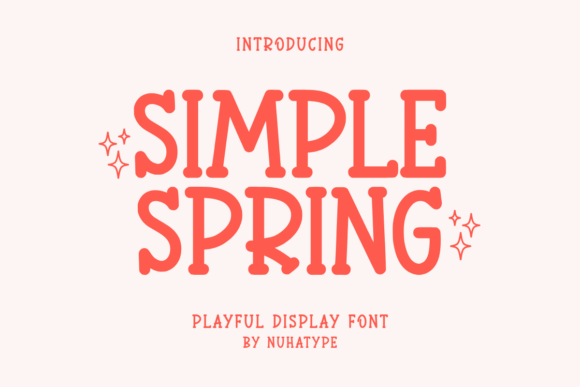
Simple Spring: A Fresh Take on Modern Handwriting
There’s a particular challenge in modern design: finding a typeface that feels personal without sacrificing clarity. We want fonts that whisper, not shout; that connect, not just communicate. This is where Simple Spring enters the conversation. It’s not merely another script font or handwritten font. Instead, it’s an elegantly minimalist, thin sans serif font that captures the subtle, organic rhythm of natural handwriting. Its thin strokes and gentle imperfections give it a warmth that purely geometric fonts lack, making it a versatile tool for projects that demand both sophistication and approachability.
The Understated Charm of Thin, Handwritten Sans Serifs
Visually, Simple Spring is defined by its lightness and simplicity. The letterforms are clean and legible, avoiding the overly decorative flourishes that can date a design or hinder readability. Its personality is one of quiet confidence—think of a neatly written note on quality stationery rather than a frantic scribble. This style makes it exceptionally effective in contexts where clarity is paramount but a human touch is desired. It bridges the gap between the structured reliability of a sans serif font and the inviting character of a handwritten font, creating a unique space in modern typography.
This dual nature is its greatest strength. For a small business owner creating product labels, Simple Spring offers a professional yet personal aesthetic. For a blogger designing social media graphics, it provides a fresh, authentic voice that stands out in a crowded feed. It’s a creative font that doesn’t scream for attention but earns it through its refined simplicity.
Where Simple Spring Truly Shines: Practical Applications
The real test of any typeface is its performance across diverse projects. Simple Spring proves its worth as a multi-faceted design asset. Its clean lines make it surprisingly adaptable, functioning well beyond the typical uses of a script.
- Publishing & Editorial Design: Use it for chapter titles, pull quotes, or author names in journals, planners, and low-content books. It adds a personal, curated feel to interior layouts without overwhelming the body text, which might pair better with a classic serif font.
- Branding & Logo Design: For brands targeting a lifestyle, wellness, or artisanal market, Simple Spring can form the core of a brand identity. It works beautifully for logo wordmarks, especially when paired with a complementary display font or a simple icon. Its legibility at various sizes is a key advantage here.
- Packaging & Product Design: Imagine this font on a coffee bag, a candle label, or a skincare bottle. It communicates care and quality. For crafters using Cricut machines, it’s ideal for creating custom stickers, labels, and decals for tumblers, mugs, and tote bags, where its thin profile ensures clean cuts and elegant results.
- Digital & Web Design: In the realm of web design and social media graphics, Simple Spring can be used for call-to-action buttons, hero section taglines, or Instagram story text. It helps create visual hierarchy by offering a distinct, humanistic contrast to more utilitarian fonts used for body copy.
Choosing and Using Simple Spring Effectively
Adopting a new premium font into your toolkit requires thoughtful consideration. Here’s practical guidance for evaluating if Simple Spring is the right fit for your next project.
Evaluating Project Fit and Readability
First, consider the project’s core need. Is the goal to convey warmth, authenticity, and approachability? Simple Spring excels there. However, for long-form body text in a printed book or a dense website, its handwritten quality might cause reading fatigue. In those cases, it’s best reserved for headlines, subheadings, or accent text, with a highly legible serif or sans serif for the bulk of the content.
Mastering Font Pairings
A great font pairing creates harmony and contrast. Simple Spring’s thin, delicate nature pairs exceptionally well with sturdier, more neutral fonts. Try combining it with:
- A geometric sans serif for a clean, contemporary look.
- A classic transitional serif for a timeless, editorial feel.
- A bold, condensed sans serif for dynamic, high-contrast headlines.
Always test your pairings in context. View them at the actual size they’ll be used, whether on a printed planner page or a mobile screen.
Understanding Licensing and Styles
Before purchasing, verify the commercial font licensing covers your intended use, especially for items for sale like printables or merchandise. Check what’s included—does the license cover digital and physical products? Also, explore the font family. Does it include multiple weights or stylistic alternates? These additional styles can provide valuable flexibility within your brand identity system, allowing for more nuanced visual hierarchy across different applications.
In the end, Simple Spring is more than just a font; it’s a design solution for those seeking to inject genuine, understated personality into their work. It understands that in a world of noise, sometimes the most powerful statement is a quiet, well-crafted one. By focusing on its strengths—legibility, elegance, and a human touch—you can leverage this typeface to create work that feels both professional and deeply personal.