Ramla: The Connected Script Font for CNC, Craft, and Branding
There's a specific challenge when you need a font that feels both personal and precise. You want the warmth of handwriting, but you also need the clean, unbroken lines that a laser cutter or CNC machine demands. This is where Ramla enters the conversation. It's not just another script font; it's a purpose-built typeface designed to bridge the gap between digital elegance and physical fabrication.
Understanding the Visual Personality of Ramla
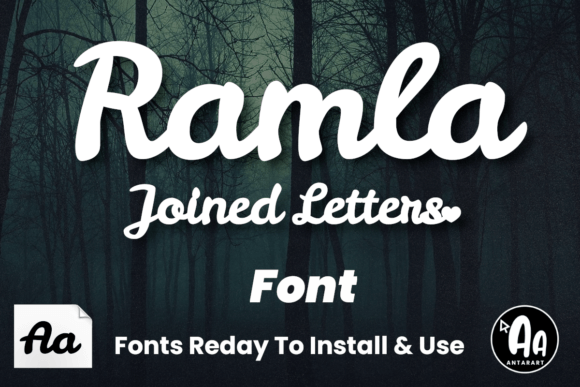
Ramla is a script font with a distinct, flowing character. Its most important feature is that the lowercase and uppercase letters are fully connected. This creates a continuous, unbroken stroke that mimics the fluid motion of a skilled hand. The overall effect is one of romantic elegance and modern sophistication. It carries the personality of a handwritten font but with a polished, intentional consistency that feels professional.
The font comes in two weights, offering a subtle but useful range for creating emphasis within your designs. Its style leans towards a clean, legible script. It avoids the overly ornate or frilly flourishes that can sometimes make script fonts difficult to read, especially at smaller sizes. Instead, Ramla prioritizes a graceful flow that maintains clarity, making it a versatile display font for headlines, logos, and short, impactful text blocks.
Where Ramla Truly Shines: Practical Applications
The true value of a font like Ramla is realized in its application. Its connected nature isn't just an aesthetic choice; it's a functional one. This makes it an exceptional creative font for projects that move beyond the screen.
Physical Fabrication and Crafting
This is Ramla's standout feature. Because every letter connects, it's fully compatible with laser cutting machines, vinyl cutters, and CNC routers. You can use it to cut names, phrases, or quotes from wood, acrylic, plastic, leather, or cardstock without worrying about the machine lifting the blade between separate letterforms. For crafters and small business owners creating custom signage, wedding decorations, personalized gifts, or branded packaging components, this compatibility is a significant practical advantage. It eliminates the need for manual editing of vector paths, saving time and ensuring a professional, seamless result.
Branding and Logo Design
A brand's logo design is its handshake. Ramla can be an excellent choice for businesses that want to convey approachability, craftsmanship, or a personal touch. Think of a boutique bakery, a floral studio, a custom stationery brand, or a wedding planning service. The font's elegant, connected style can help build a brand identity that feels warm, trustworthy, and artisanal. It works particularly well for logotypes where the business name is rendered in a single, flowing wordmark.
Digital and Print Design Projects
Beyond physical products, Ramla has strong applications in editorial design, packaging design, and web design. Use it for hero text on a website, for the title of a romantic novel, for social media graphics promoting a heartfelt message, or for the header of a wedding invitation suite. As a display font, it's meant to be used sparingly for impact. Pairing it with a clean sans serif font for body text creates a beautiful contrast that guides the reader's eye and establishes a clear visual hierarchy.
Making the Decision: Is Ramla Right for Your Project?
Choosing a font is a strategic decision that influences readability, perception, and engagement. Here’s how to evaluate if Ramla is the right design asset for you.
Evaluating the Fit
Ask yourself: Does my project call for a personal, connected, or romantic aesthetic? Is physical fabrication a possibility? Ramla excels in contexts where a human touch is desired. It may be less suitable for long paragraphs of text or for brands that need to project a starkly modern, technical, or minimalist image where a serif font or geometric sans serif font would be more appropriate.
Testing Font Pairings
Effective font pairing is crucial. Ramla, as a script, has a lot of personality. To maintain balance and readability, pair it with a simple, neutral typeface. A classic sans serif font like Lato, Open Sans, or Montserrat often works well. For a more traditional feel, a simple serif font like Georgia or Libre Baskerville can create an elegant, readable combination. Always test your pairings at the intended size and in the context of your overall design layout.
Reviewing the Font's Offerings
Ramla includes two weights. While this is a more limited range than some premium font families, it provides enough variation for most display and branding applications. You can use the different weights to create subtle emphasis within a headline or to differentiate between a main tagline and a supporting element. Remember, its strength is in its specific connected style, not in offering a dozen different weights and widths.
Understanding the Technical Foundation
It's worth noting that Ramla is based on the open-source Leckerli One font, which has been carefully edited to achieve its fully joined, CNC-friendly form. This is a common and ethical practice in modern typography, where designers build upon existing open-source work to create specialized tools. Always check the specific license for the version of Ramla you are using to ensure it meets your project's commercial requirements, especially if you are using it for client work or selling products featuring the font.
Final Practical Considerations
Always test the font in your actual design environment. View it on different screens and, if possible, print a sample. For fabrication projects, do a small test cut with your chosen material to ensure the stroke width and connections translate perfectly to your machine's capabilities. This hands-on evaluation is the final, critical step in any professional design workflow.
Ramla fills a specific niche with grace and technical precision. It’s a commercial font solution for creatives who need the beauty of a connected script with the reliability required for physical production. By understanding its strengths and pairing it thoughtfully, you can leverage its elegant flow to create memorable, cohesive, and engaging designs across both digital and tangible mediums.